
Welcome to Grand Dukes of the West
The story of Valois Burgundy is one of the most exciting of the Late Middle Ages. The four Valois Dukes of Burgundy used political intrigue, calculated splendor, economic power, and good old-fashioned violence to forge a state out of the many Duchies and Counties between France and the Holy Roman Empire. During Burgundy’s height its Dukes were seen by many as the equals of Kings and Emperors and their court was at the center of Western Europe’s cultural and political development. And then it all fell apart. Please join me as I explore the history and legacy of this forgotten kingdom.
Social Media:
Latest Episode:
-
Episode 71: The Boiling Point
From Le Crotoy on the Somme to Macon on the Saone, an Iron Curtain has descended across the Kingdom; a Cold War is being waged between King Charles VII of France and Duke Philip the Good of Burgundy. The Peace of Arras seems as fragile as is has ever been.Time Period Covered: 1459-1461
Notable People: Philip the Good, Charles the Bold, Charles VII, Louis XI, Antoine Lord of Croy, Francesco Sforza, Prospero da Camogli, Edward IV of England
Notable Events/Developments: Dauphin Louis’ money troubles, Rising conflict between Charles Count of Charolais and the Croy, Diplomatic Summit at Montbazon (1459), Diplomatic Summit at Dijon (1459), Edward IV declares himself King of England, Death of Charles VII
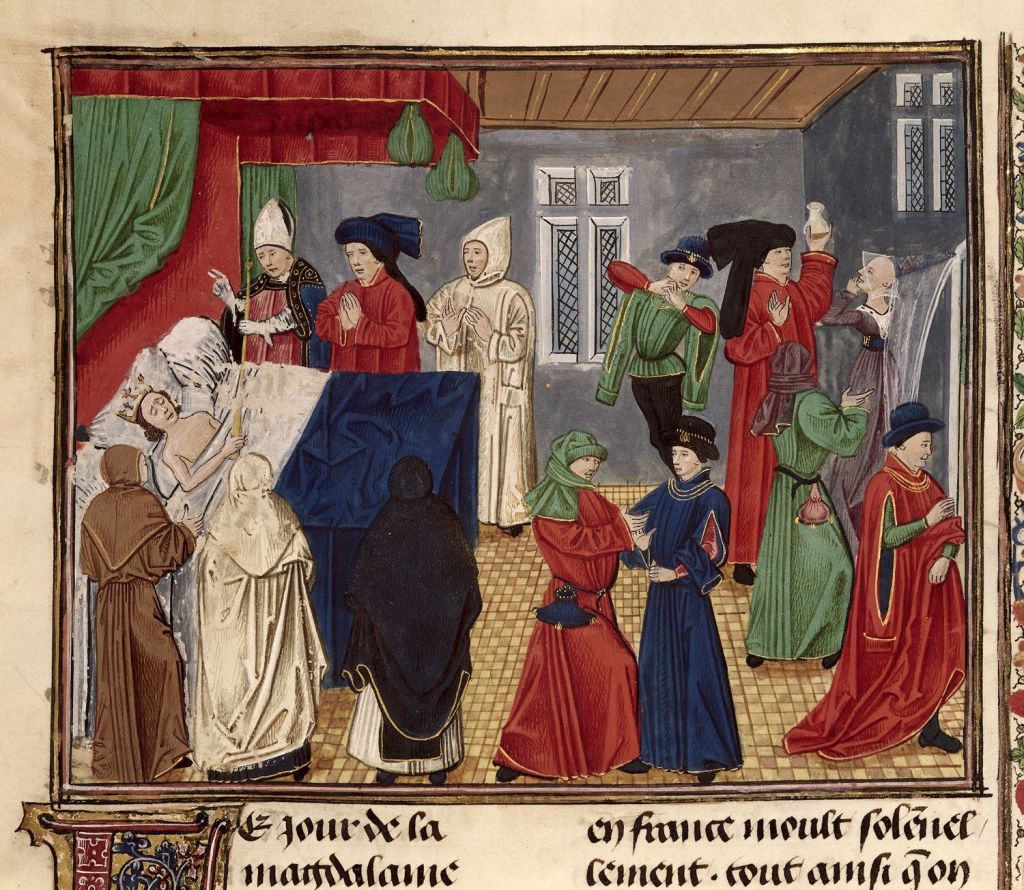
The death of Charles VII of France in 1461 broke the tension between France and Burgundy. By the time he died, rumor had it that he had already given orders for an attack on Burgundy to proceed. Sources
Philip the Good by Richard Vaughan
Charles VII by Malcolm Vale
Louis XI: The Universal Spider by Paul Murray Kendall
Histoire de Charles VII by Gaston du Fresne de Beaucourt Tome VI
Les Croy, conseillers des ducs de Bourgogne by Marie-Rose Thielemans
A l’ombre du Pouvoir: Les entourages princiers au Moyen Age Edited By Jean-Louis Kupper and Alain Marchandisse
The Wars of the Roses : The Fall of the Plantagenets and the Rise of the Tudors by Dan Jones
The Calais Garrison: War and Military Service in England 1435-1558 by David Grummitt
The Good King: Rene of Anjou and Fifteenth Century Europe by Margaret Kekewich
A History of Milan Under the Sforza by Cecilia Mary Ady
Dispatches with Related Documents of Milanese Ambassadors in France and Burgundy, 1450 – 1483 Volumes I and II Edited by Paul Murray Kendall and Vincent Ilardi
Chronicles of Mathieu d’Escouchy
Memoires by Jacques du Clerq
Recueil des croniques et anchiennes istories de la Grant Bretaigne, a present nomme Engleterre by Jean de Wavrin

