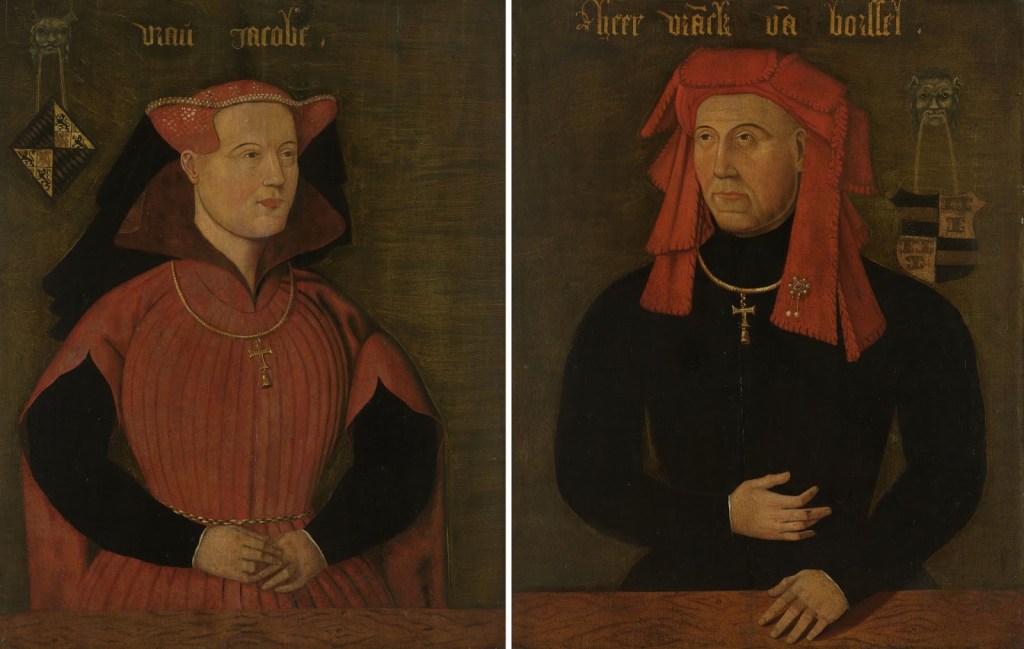
The late 1420s and early 1430s saw the rapid expansion of the Burgundian State. In this episode we’ll trace the course of that expansion and explore just how the Duke of Burgundy was able to unite these disparate territories.
Time Period Covered: 1430-1433
Notable People: Philip the Good, Jacqueline of Bavaria, Frank van Borselen, Philip of Saint-Pol
Notable Events/Developments: The Treaty of Delft, Mortgage of Holland and Zeeland to the Borselen, Marriage of Jacqueline of Bavaria and Frank van Borselen, Death of Philip of Saint-Pol, Burgundian acquisition of Namur

The map above shows Burgundian expansion in the 1420s and 1430s. In less than decade, the Duke of Burgundy managed to take over a significant portion of the Low Countries and become one of the most powerful princes in Europe.
Sources
Magnanimous Dukes and Rising States by Robert Stein
Philip the Good by Richard Vaughan
The Chronicles of Enguerrand De Monstrelet
The Promised Lands by Wim Blockmans and Walter Prevenier
Manors and Markets: Economy and Society in the Low Countries 500-1600 by Bas Van Bavel
Constitutions and their Application in the Netherlands during the Middle Ages by Raymond Van Uytven and Wim Blockmans
A Mediaeval Princess by Ruth Putnam
The Golden Age of Burgundy by Joseph Calmette
The Hundred Years War: Triumph and Illusion by Jonathan Sumption
The Duchy of Brabant between France, Burgundy, and England by Sergio Boffa in The Hundred Years War Part III Edited by Villalon and Kagay
Conflicting Roles: Jacqueline of Bavaria, Countess and Wife by Renee Nip in Scholars, Saints, and Politicians: Gender as a Tool in Medieval Studies Edited by van Dijk and Nip
 Grand Dukes of the West