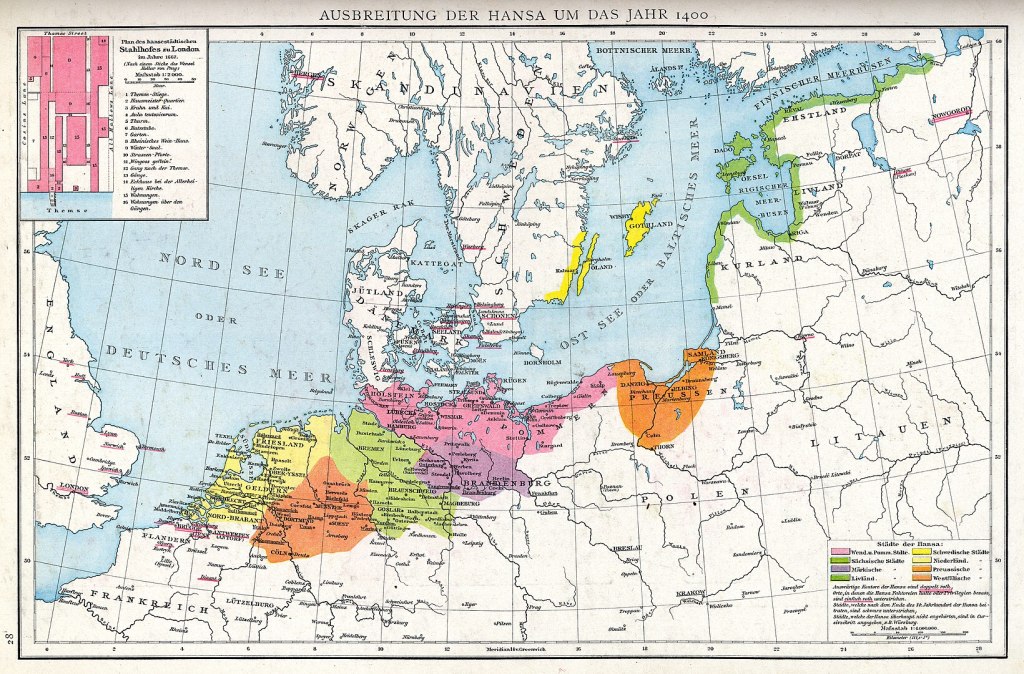
The Hanseatic League was a major player in Northern Europe for centuries, it dominated trade in the North and Baltic Seas, fought wars with rival powers, and dictated terms to princes. But the League was not a state, proto-state, or quasi-state, it was a collection of Merchants, Guilds, and Towns.
Time Period Covered: 1143-1441
Notable Events/Developments: Founding of Lubeck, Formation of the Hanseatic League, Hanseatic Boycotts of Bruges (1280-1282, 1358-1360, 1388-1391), Danish-Hanseatic War, The Confederation of Cologne, Dutch-Hanseatic War
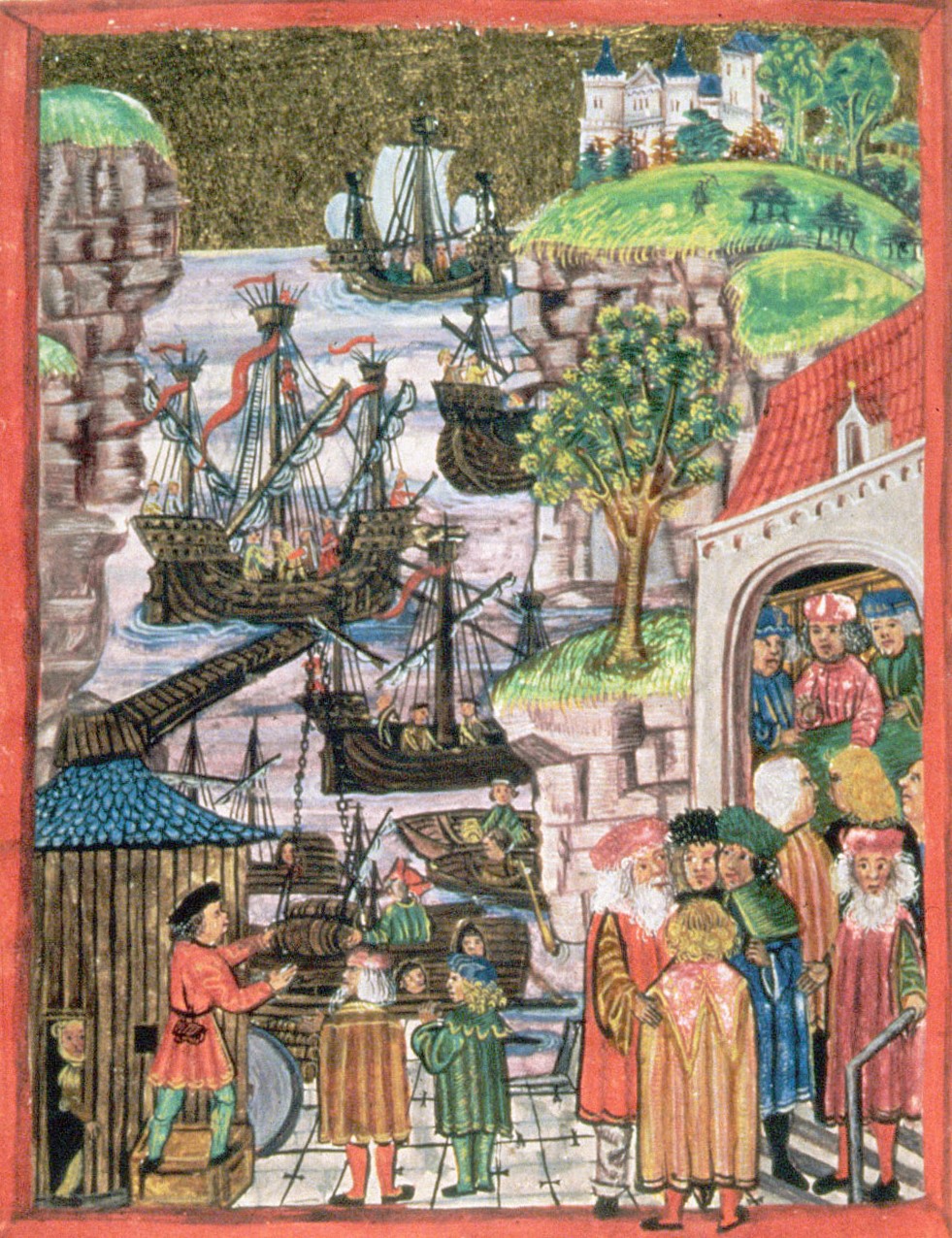
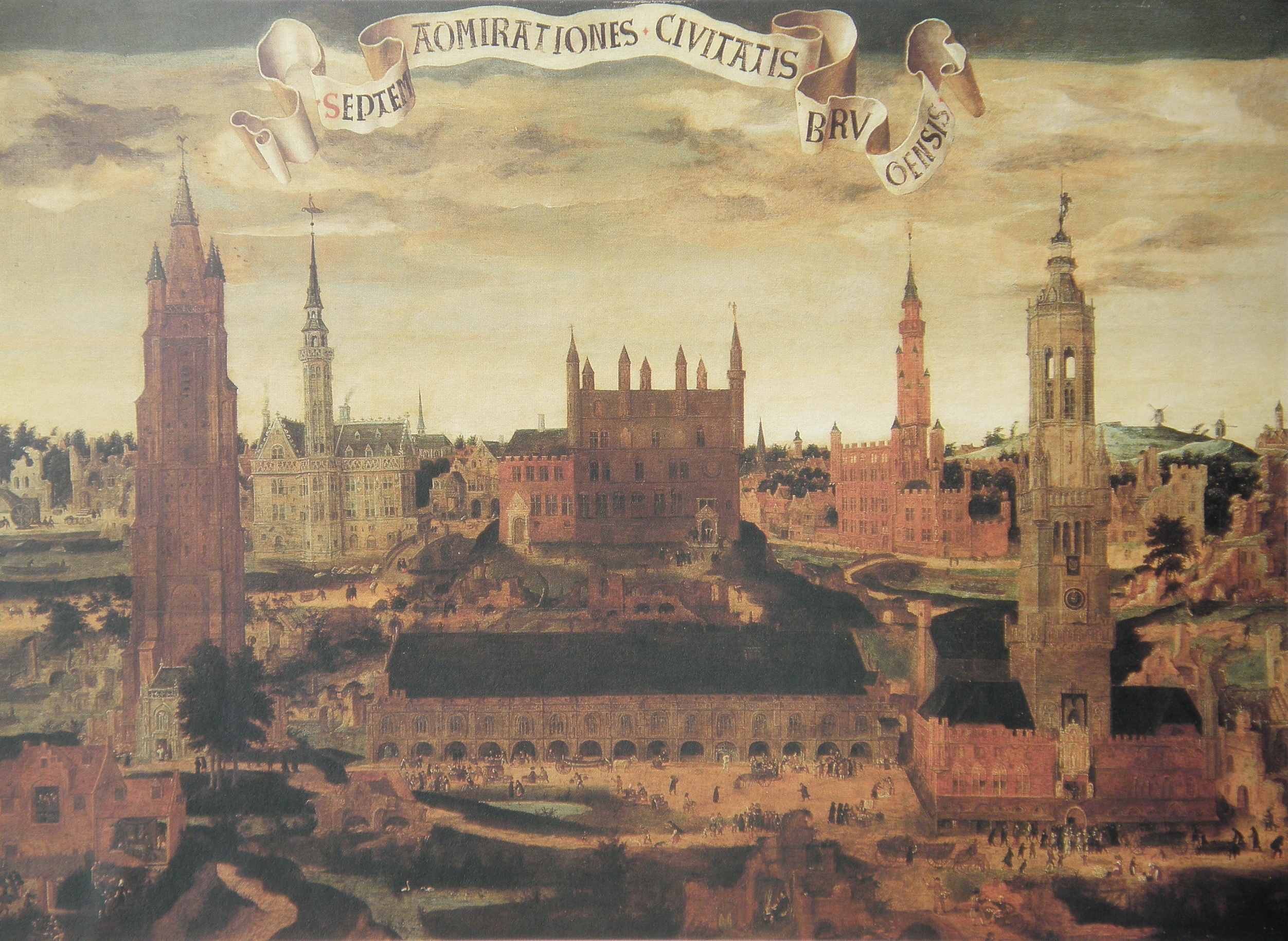
Left: A depiction of representatives from Lubeck and Hamburg sealing their alliance which opened a land route between the cities bypassing the Danish Sound. Right: A depiction of Bruges from the 16th century. The orange building on the right is the Oosterlingenhuis, one of the buildings owned and operated by the Hanseatic Kontor of Bruges.
Sources
A Companion to the Hanseatic League Edited By Donald J. Harreld
The German Hansa by Philippe Dollinger
Institutions of Hanseatic Trade by Ulf Christian Ewert and Stephan Selzer
The Hanse in Medieval and Early Modern Europe Edited by Justyna Wubs-Mrozewicz and Stuart Jenks
The Hansa Towns by Helen Zimmern
Networks of the Hanseatic League by Margrit Schulte Beerbuhl
Medieval Bruges 850-1550 Edited by Andrew Brown and Jan Dumolyn
Medieval Flanders by David Nicholas
Philip the Bold by Richard Vaughan
Philip the Good by Richard Vaughan
 Grand Dukes of the West