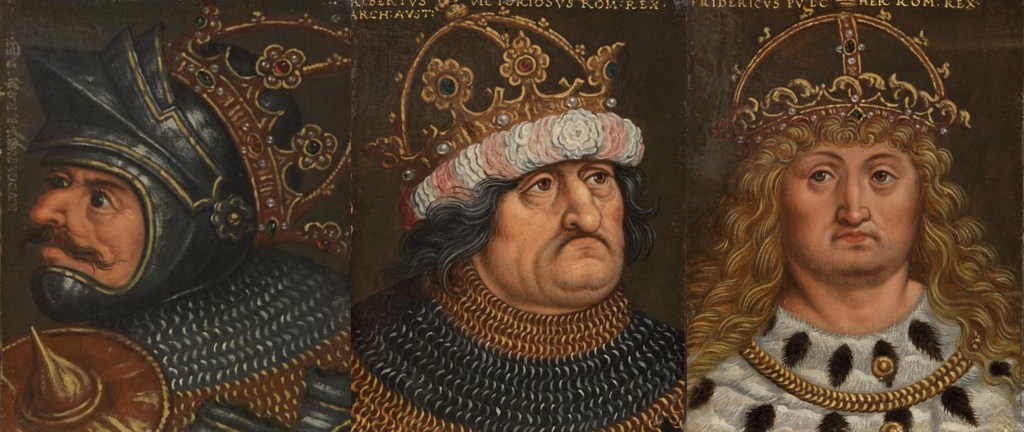
When the Electors of the Holy Roman Empire chose Rudolf of Habsburg to be the new King of Germany, they were hoping that he’d be someone they could control. But Rudolf, despite being a minor Count from Swabia, would prove to be nobody’s puppet, and over the course of his reign he transformed the fortunes of his family, and the Empire as a whole.
Time Period Covered: 1250-1330
Notable People: Rudolf I of Germany, Albert I of Germany, Ottokar II of Bohemia, Frederick the Fair, Ludwig the Bavarian
Notable Events/Developments: Great Interregnum of the Holy Roman Empire, Election of Rudolf I, The Battle on the Marchfeld, Establishment of Landvogts, Habsburg acquisition of Austria, Election of Adolf of Nassau, Election of Albert I, Double Election of Frederick the Fair and Ludwig the Bavarian
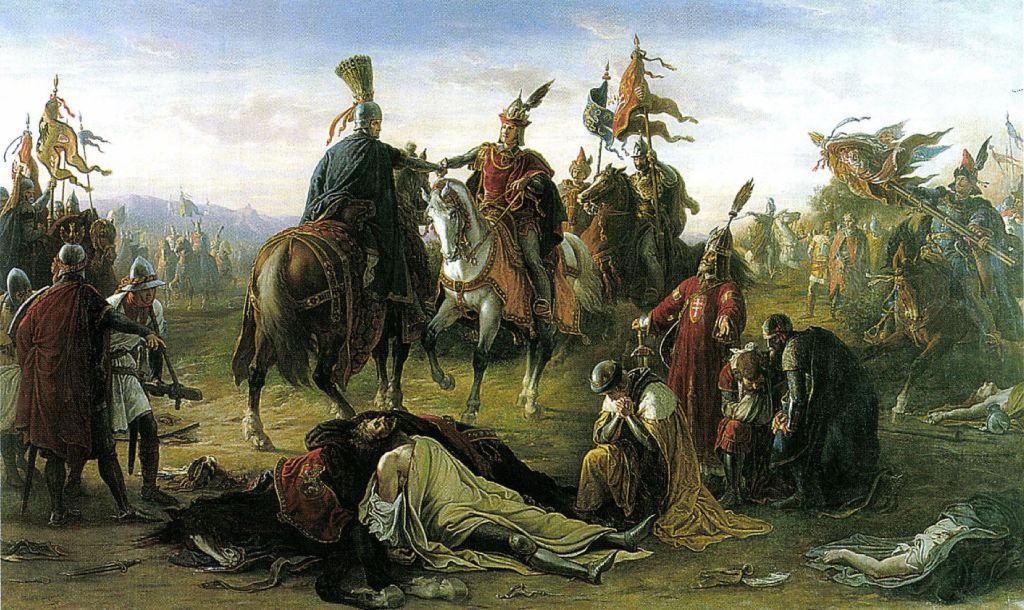

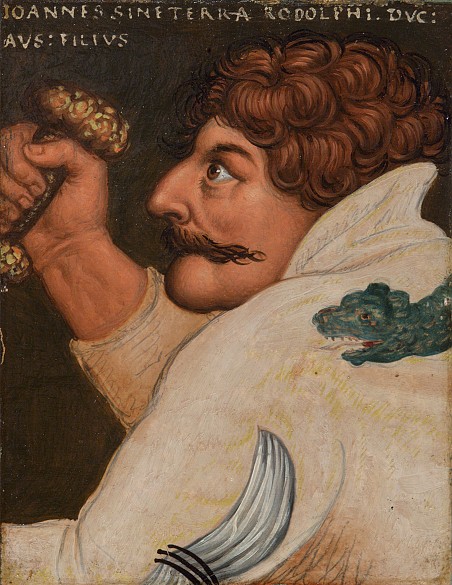

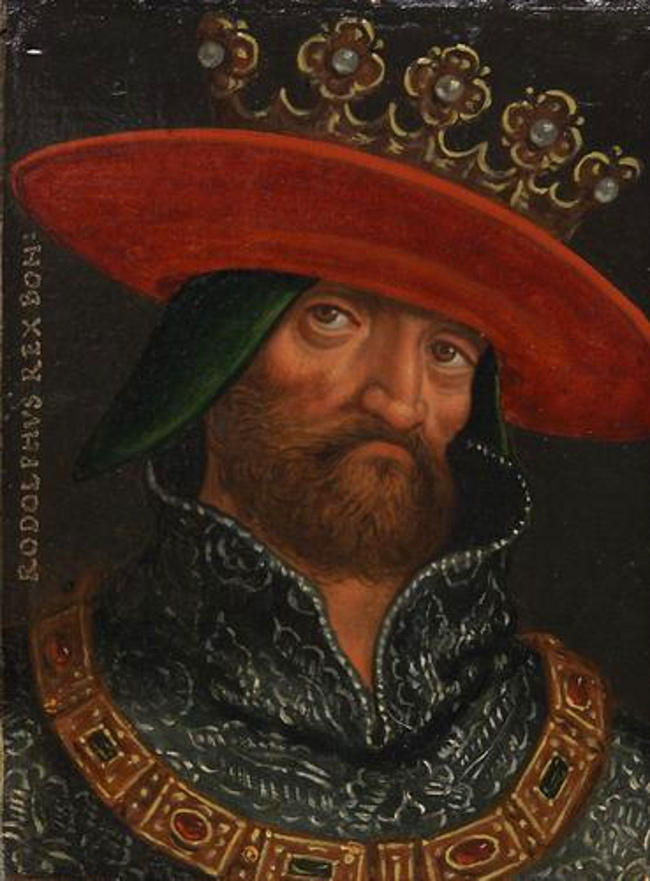
From Left to Right: King Ottokar II of Bohemia, John the Parracide, Leopold I of Habsburg, Rudolf III of Habsburg all by Anton Boys.
Sources
Welfs, Hohenstaufen and Habsburgs by Michael Toch in The New Cambridge Medieval History Volume V
The Empire: From Adolf of Nassau to Lewis of Bavaria by Peter Herde in The New Cambridge Medieval History Volume VI
The Habsburgs: To Rule the World by Martyn Rady
The Habsburgs: The History of a Dynasty by Benjamin Curtis
The Origins of the German Principalities, 1100-1350 Edited by Graham A. Loud and Jochen Schenk
Heart of Europe: A History of the Holy Roman Empire by Peter H. Wilson
German Histories in the Age of Reformations, 1400-1650 by Thomas A. Brady Jr
The Czechs and the Lands of the Bohemian Crown by Hugh Agnew
A History of The Czech Lands by Jaroslav Panek and Oldrich Tuma
 Grand Dukes of the West