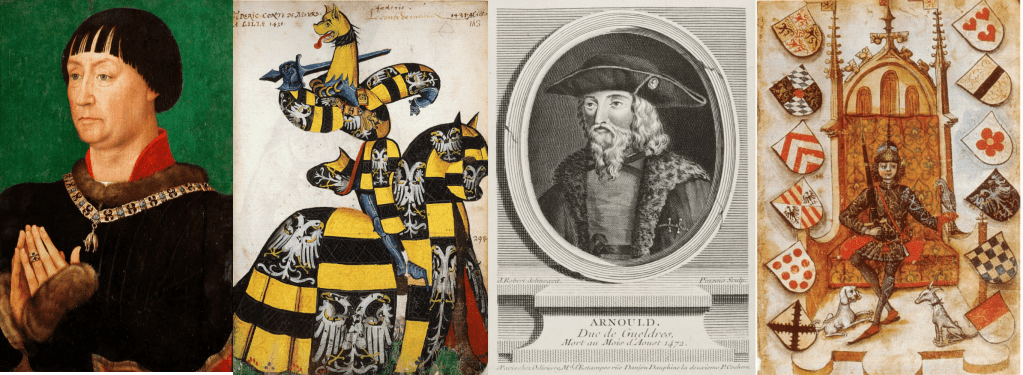
In the mid-1440s, Frederick III the King of Germany and Duke Philip the Good entered into negotiations over the prospect of giving the Duke a crown. While Frederick pictured simply elevating one of Philip’s territories from Duchy to Kingdom, the Duke of Burgundy was more ambitious and attempted to resurrect the old Frankish Kingdom of Lotharingia.
Time Period Covered: 1440-1457
Notable People: Philip the Good, Frederick III, Duke Adolph IV of Cleves, Duke John I of Cleves, Adolph of Cleves Lord of Ravenstein, Count Freidrich IV of Mors, Dietrich of Mors Archbishop of Cologne, Arnold of Egmond Duke of Guelders, Duke Adolph of Julich-Berg, Duke Gerhard of Julich-Berg, Rene of Anjou, Antoine Count of Vaudemont, Ferry of Vaudemont, Charles VII of France, Louis XI of France
Notable Events/Developments: Soest Feud, Münster Diocesan Feud, Battle of Saint Hubert’s Day, Siege of Metz (1444)


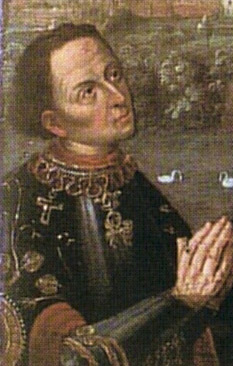

From Left to Right: Jacob von Sierck Archbishop of Trier, Dietrich von Mors Archbishop of Cologne, Adolph IV Duke of Cleves, Adolph of Cleves Lord of Ravenstein
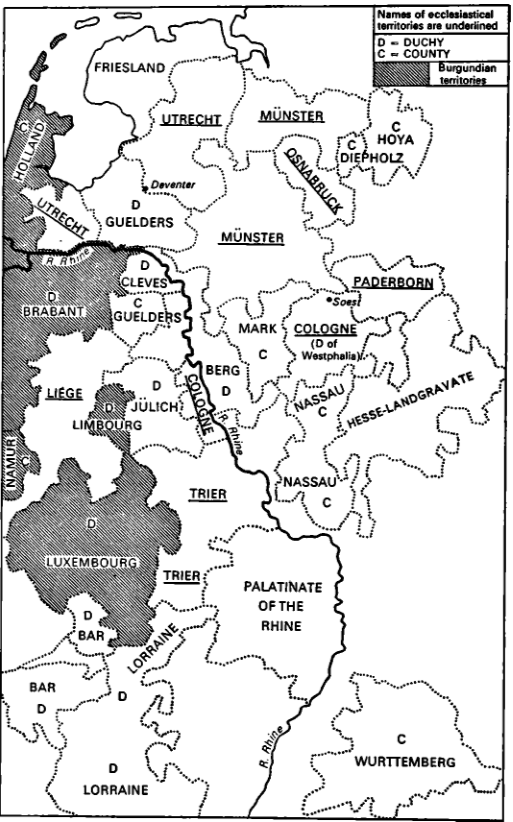
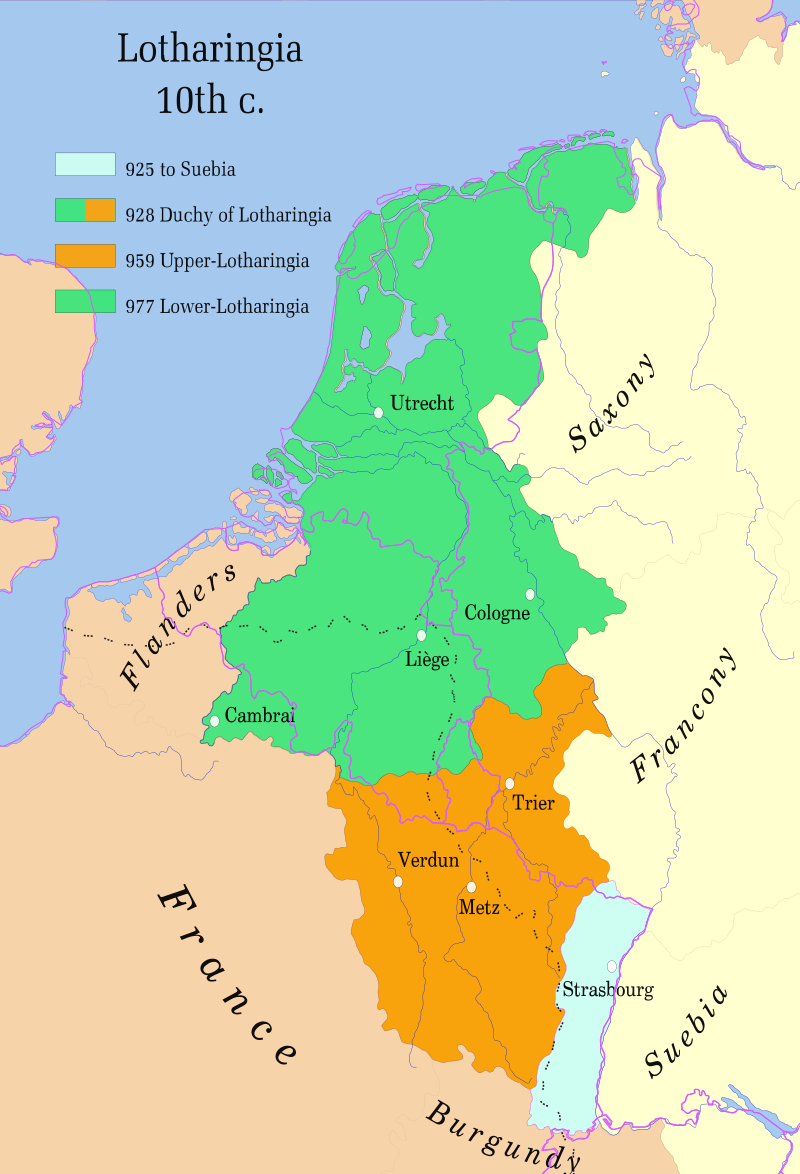
Left: Burgundy’s Eastern Neighbors. Right: The old Frankish Kingdom (and later Duchies) of Lotharingia
Sources
Philip the Good by Richard Vaughan
The Promised Lands by Wim Blockmans and Walter Prevenier
The Good King: Rene of Anjou and Fifteenth Century Europe by Margaret L. Kekewich
The Golden Age of Burgundy by Joseph Calmette
The Chronicles of Enguerrand De Monstrelet
Magnanimous Dukes and Rising States by Robert Stein
The Hundred Years War: Triumph and Illusion by Jonathan Sumption
Germany and the Empire by Tom Scott in The New Cambridge Medieval History Volume VII
Princes and Territories in Medieval Germany by Benjamin Arnold
Louis XI: The Universal Spider by Paul Murray Kendall
 Grand Dukes of the West